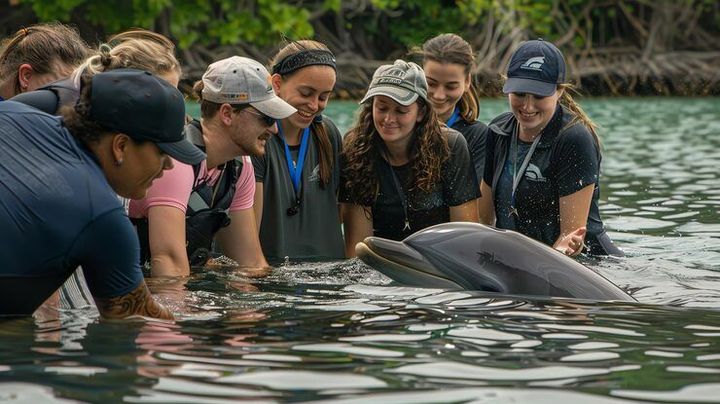
Ocean Conservation Voyages Guide: How Expeditions Support Marine Life and Ocean Protection
Ocean conservation voyages are organized sea expeditions designed to study, protect, and better understand marine ecosystems. These journeys are typically carried out by research vessels, environmental organizations, universities, and government agencies. Scientists, marine biologists, climate researchers, and conservation specialists travel across oceans to observe marine life, collect environmental data, and assess the health of underwater ecosystems.
Ocean conservation voyages developed as ocean research expanded in the late twentieth century. As awareness of climate change, coral reef decline, and marine pollution increased, expeditions began focusing more on conservation goals.
Instead of only exploring unknown regions, modern voyages aim to collect scientific data that supports environmental protection and policy decisions.
Role of Technology in Ocean Research
Ocean conservation voyages rely on advanced marine technologies to study ecosystems. Tools such as underwater drones, satellite tracking systems, and oceanographic sensors help researchers gather accurate data.
These technologies enable scientists to monitor ocean temperatures, track marine species, and analyze water quality.
Global Collaboration in Ocean Studies
Many expeditions involve partnerships between international organizations and coastal nations. Since oceans connect multiple regions, conservation efforts require global cooperation.
Data collected during these voyages contributes to international agreements and long-term marine protection programs.
Importance of Research and Exploration
By combining exploration with environmental monitoring, these voyages provide critical insights into marine ecosystems. They improve understanding of biodiversity, ecological balance, and environmental threats.
This knowledge supports informed decision-making in ocean conservation.
Why Ocean Conservation Voyages Matter Today
Oceans cover over 70 percent of the Earth’s surface and play a vital role in regulating the global climate. They absorb carbon dioxide, produce oxygen, and support diverse marine life.
However, marine ecosystems face increasing threats from human activity and environmental change.
Scientific Data for Environmental Decisions
Ocean voyages collect data that cannot be fully captured from land or satellites. This includes information about marine biodiversity, ocean currents, and ecosystem health.
Such data supports evidence-based environmental policies and conservation strategies.
Impact on Stakeholders
Ocean conservation research benefits a wide range of groups:
- Coastal communities
- Fisheries and marine industries
- Policymakers and regulators
- Environmental scientists
- Educators and students
Accurate data helps improve resource management and environmental planning.
Key Environmental Challenges Studied
- Coral reef bleaching due to rising temperatures
- Plastic and microplastic pollution
- Changes in fish migration patterns
- Ocean acidification
- Habitat loss in marine ecosystems
Understanding these issues helps identify risks and develop solutions.
Educational and Awareness Role
Ocean conservation voyages also contribute to public education. Research findings are often shared through reports, open data platforms, and educational programs.
This helps raise awareness about marine ecosystems and the need for conservation.
Recent Developments in Ocean Conservation Research
Ocean research has advanced significantly with new technologies and global initiatives. Developments in 2024 and early 2025 highlight the growing importance of marine conservation.
Use of Autonomous Underwater Vehicles
Autonomous underwater vehicles (AUVs) are increasingly used to explore deep-sea environments. These robotic systems can map ocean floors and observe ecosystems without disturbing marine life.
Research on Marine Heatwaves
In 2024, several expeditions focused on studying marine heatwaves. Scientists collected temperature data and analyzed the effects of warming on coral reefs and marine species.
Real-Time Ocean Monitoring Systems
Satellite-connected sensors now provide real-time environmental data. These systems allow researchers to track ocean conditions and respond quickly to changes.
Discovery of New Marine Species
Recent biodiversity surveys in 2025 have identified previously unknown species in deep-sea regions. These discoveries highlight how much of the ocean remains unexplored.
Focus on Plastic Pollution
Research voyages have expanded studies on microplastics. Findings show that plastic pollution exists even in remote and deep ocean areas.
Role of Artificial Intelligence
Artificial intelligence is being used to analyze large datasets from ocean research. AI helps identify species, detect patterns, and assess environmental risks more efficiently.
Environmental Laws and Ocean Governance
Ocean conservation is guided by international laws and governance frameworks. These regulations ensure responsible use and protection of marine resources.
Key International Agreements
Several global agreements influence ocean conservation:
- United Nations Convention on the Law of the Sea (UNCLOS)
- Convention on Biological Diversity
- High Seas Biodiversity Treaty (2023)
These frameworks establish rules for marine protection and international cooperation.
National Marine Policies
Countries implement their own marine conservation programs. These regulate activities such as fishing, research permits, and protected areas.
Scientific data from ocean voyages helps update these policies.
Role of Collaboration
Governments, research institutions, and international organizations often work together on large-scale studies. This collaboration ensures policies are based on reliable scientific evidence.
Useful Tools and Resources for Marine Research
Ocean conservation relies on specialized tools and technologies for data collection and analysis. These tools help transform observations into actionable insights.
Common Research Instruments
- Water quality sensors
- Acoustic sonar mapping systems
- Remotely operated vehicles (ROVs)
- Satellite tracking devices
These instruments support detailed study of marine environments.
Data Applications in Marine Research
| Research Activity | Data Collected | Environmental Application |
|---|---|---|
| Coral reef surveys | Reef health indicators | Coral conservation planning |
| Ocean temperature monitoring | Climate data | Climate change modeling |
| Marine species tracking | Migration patterns | Fisheries management |
| Plastic pollution sampling | Microplastic levels | Pollution reduction strategies |
These tools and datasets enable scientists to understand and protect ocean ecosystems.
Common Questions About Ocean Conservation Voyages
What is the main goal of these voyages?
The primary goal is to study marine ecosystems and support conservation. Researchers collect data to understand ocean health and biodiversity.
Who participates in these expeditions?
Participants include marine biologists, oceanographers, engineers, and research teams. Some missions also involve students and educators.
How long do these voyages last?
The duration varies depending on the mission. Some last a few days, while others continue for several weeks or months.
What ecosystems are studied?
Researchers explore diverse environments such as coral reefs, deep-sea habitats, coastal regions, and open oceans.
How does the data help conservation?
The data helps identify environmental threats and guide policy decisions. It supports marine protection strategies and sustainable resource management.
Conclusion
Ocean conservation voyages are essential for understanding and protecting marine ecosystems. By combining exploration with scientific research, these missions provide valuable insights into ocean health.
Advances in technology, data analysis, and international collaboration are expanding the reach of ocean research. Scientists can now study even the most remote parts of the ocean more effectively.
Environmental laws and global cooperation also play a key role in supporting conservation efforts. These frameworks ensure that marine resources are managed responsibly.
As environmental challenges continue to grow, ocean conservation voyages will remain critical to preserving biodiversity and maintaining the balance of the world’s oceans.