Industrial Machinery Tools: A Complete Guide to Types, Uses, and Basics
Industrial machinery tools are essential equipment used in manufacturing, construction, and engineering processes. These tools are designed to shape, cut, drill, or assemble materials such as metal, wood, and plastic. They exist to improve efficiency, ensure precision, and reduce manual effort in industrial operations.
From simple hand-operated devices to advanced computer-controlled machines, industrial machinery tools have evolved significantly. Industries rely on these tools to maintain consistent quality, increase production speed, and support complex manufacturing needs. Without them, large-scale production would be slow, less accurate, and highly labor-intensive.
Why Industrial Machinery Tools Matter Today
Industrial machinery tools play a critical role in modern economies. They support sectors such as automotive, aerospace, construction, and electronics. Their importance continues to grow as industries move toward automation and precision engineering.
Key Reasons Industrial Tools Matter
- Improve productivity and reduce operational delays
- Enable high precision and repeatability in manufacturing
- Reduce human error and workplace fatigue
- Support mass production and scalability
- Enhance workplace safety when used correctly
Many industries face challenges like rising demand, quality control, and cost efficiency. Industrial tools help solve these problems by automating repetitive tasks and ensuring consistent output. They are especially important for businesses aiming to remain competitive in global markets.
Common Types of Industrial Machinery Tools
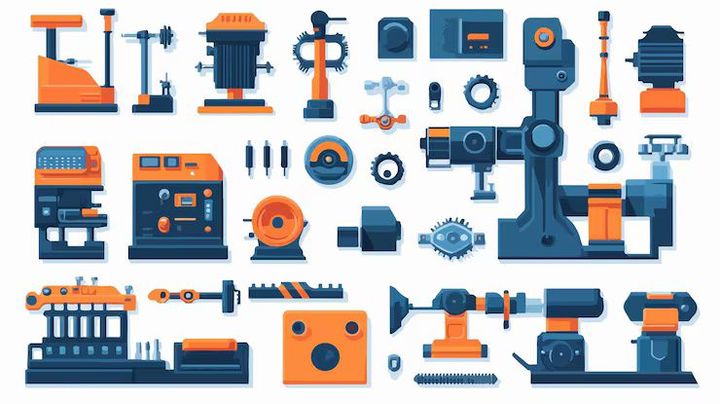
Understanding different types of tools helps in selecting the right equipment for specific applications. Each tool serves a unique purpose, and industries often use a combination to complete production processes efficiently.
Types, Functions, and Common Uses
| Tool Type | Function | Common Use Case |
|---|---|---|
| Lathe Machines | Rotates material for shaping | Metal and wood turning |
| Milling Machines | Removes material using rotary cutters | Precision part manufacturing |
| Drilling Machines | Creates holes in materials | Construction and fabrication |
| Grinding Machines | Smoothens surfaces | Finishing operations |
| CNC Machines | Computer-controlled machining | Automated production lines |
Recent Trends and Updates in Industrial Machinery Tools
The industrial machinery sector has seen rapid advancements, especially with the rise of smart manufacturing technologies.
Recent Developments
- 2025: Increased adoption of smart sensors in machinery for real-time monitoring
- 2025: Growth in automation using AI-based control systems
- 2024–2026: Expansion of Industry 4.0 practices across manufacturing units
- Integration of IoT (Internet of Things) for predictive maintenance
- Use of energy-efficient machinery to reduce environmental impact
Trend Representation
| Year | Key Trend |
|---|---|
| 2024 | Automation adoption increases |
| 2025 | Smart sensors and AI integration |
| 2026 | Focus on sustainability |
These updates show a clear shift toward intelligent and connected machinery systems. Industries are investing in tools that provide data insights and reduce downtime.
Laws, Regulations, and Industrial Policies
Industrial machinery tools are governed by safety standards and regulations to ensure worker protection and environmental compliance. In India, several policies influence machinery use:
- Factories Act, 1948 – Ensures workplace safety and proper machinery handling
- Occupational Safety, Health and Working Conditions Code (2020) – Covers safety measures for industrial operations
- Bureau of Indian Standards (BIS) – Sets quality standards for machinery
- Make in India Initiative – Encourages local manufacturing and adoption of advanced tools
Key Compliance Requirements
- Regular machine inspections
- Proper operator training
- Use of safety guards and protective equipment
- Maintenance of operational records
Following these regulations helps prevent accidents and ensures efficient machinery performance.
Useful Tools and Resources for Industrial Machinery
Many digital tools and resources help industries manage machinery operations effectively.
- CAD Software (Computer-Aided Design) – Designing parts and machinery components
- CAM Software (Computer-Aided Manufacturing) – Controls machine tools through programming
- Machine Maintenance Apps – Track equipment performance and schedule servicing
- Online Learning Platforms – Provide training on machinery operation and safety
- Technical Manuals and Templates – Step-by-step guidance for installation and usage
These resources improve planning, reduce errors, and ensure smooth industrial workflows.
Best Practices for Using Industrial Machinery Tools
To maximize efficiency and safety, industries follow certain best practices:
- Conduct regular maintenance and inspections
- Train workers on proper machine usage
- Use protective equipment like gloves and goggles
- Keep workspaces clean and organized
- Monitor machine performance using digital systems
Adopting these practices extends machine lifespan and reduces operational risks.
Frequently Asked Questions (FAQs)
What are industrial machinery tools used for?
They are used for shaping, cutting, drilling, and assembling materials in manufacturing and construction processes.
What is the difference between CNC and manual machines?
CNC machines are automated and computer-controlled, while manual machines require direct human operation.
How often should industrial machinery be maintained?
Regular inspections and servicing are recommended to ensure optimal performance and safety.
Are industrial machinery tools safe to use?
Yes, with proper safety guidelines, training, and protective equipment.
What industries use industrial machinery tools the most?
Automotive, aerospace, construction, and electronics rely heavily on these tools.
Conclusion
Industrial machinery tools are the backbone of modern manufacturing and production systems. They enable industries to achieve precision, efficiency, and scalability. With advancements in automation, smart technology, and sustainability, these tools are becoming more intelligent and reliable.
Understanding their types, importance, and proper usage is essential for anyone involved in industrial processes. Following safety regulations and adopting modern tools allows industries to improve productivity and ensure long-term success.